
Recent Articles
 Chapel Street Chapels11th July 2016
- Ormskirk: A Historic Market Town6th July 2016
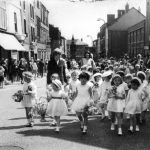 An Ormskirk Tradition: The Sunday School Anniversary Walks6th July 2016
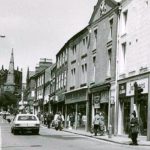 Riot At Ormskirk6th July 2016
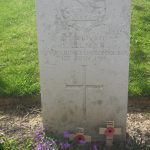 Ormsirk Men & The First Weeks Of The Battle Of The Somme4th July 2016
Top Articles

With Love From Ormskirk
With Love From Ormskirk
As Valentines Day once more approaches, let’s look back at how the romantics of the town put a lot of effort into marking the day with their own true love.
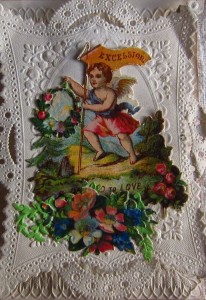
An example of a Victorian Valentine card
In the 1830’s, 60,000 valentine cards were sent by the relatively expensive postal service in Great Britain. These cards were not as we find today, mass produced and put out on display for you to browse and select what suits. The cards sent in the 19th century were mainly homemade, elaborate postcards, decorated with silk and lace and ribbons.
People of Ormskirk would have been as skilled as anyone else at crafting a special card for their Valentine with coin spent on a little piece of ribbon or lace from the local milliners in the town, for those who could afford that. Many girls probably sacrificed trimmings from their Sunday Bonnets and possibly various other apparel, to decorate their cards.

The site of Ormskirk’s original post office on Aughton Street
We can only wonder at how so many thousands of cards were sent on Valentines Day at a time when many young people would only be able to make their mark ‘X ‘on their marriage lines! Symbolic tokens of love crafted onto a homemade card, along with it being the 14th February must have helped to deliver the message without words!
Young people met through the workplace, Church or Chapel or family occasions, Ormskirk was a town which adored its gatherings and festivities all year round, with Church Bazaars, Town Galas, theatrical and musical performances available at several theatres and venues in the town and many groups for young people to meet and fall in love. It wasn’t all about working a 6 day week with no time to relax, people in the 19th century didn’t travel miles to work, days were long but social events were very well supported, there was little to stay at home for! Entertainment brought people together outside of work.

Another example of a Victorian Valentine card
Once the cards were made and ready to post, the busiest place in the town on the 13th and 14th February in the 19th century would have been the post office, for most of those early years it was at the corner of Aughton Street and Church Street, offering delivery the same day for local post, the foot post from Southport arrived late in the day, by 5.30 if the post man made good time.
The marked difference between 19th Century homemade Valentines Cards and the more modern mass manufactured cards which we know of is the cost and possibly more so the personal touch. The only financial gain then was for the post office.
From A Distance – A New Perspective On Ormskirk Parish Church
From A Distance – A New Perspective On Ormskirk Parish Church
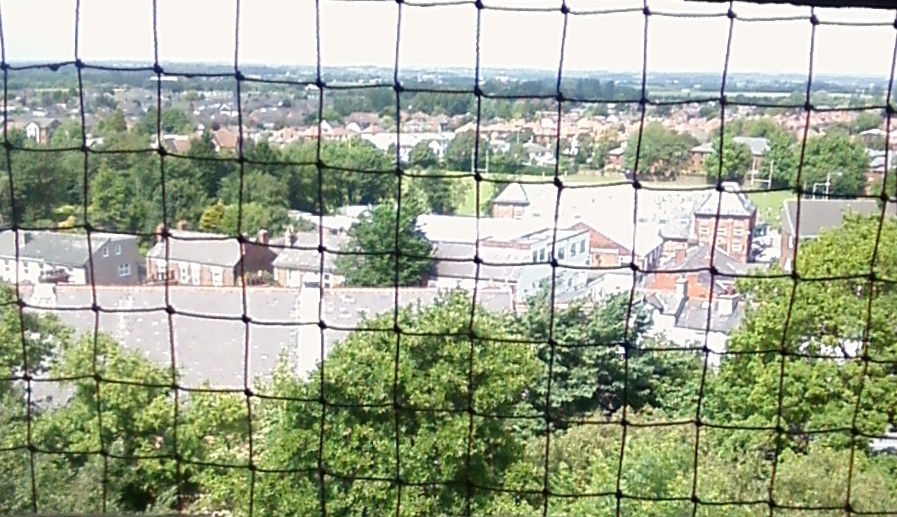
A treat for those who have never been able to ascend to the dizzy heights of the Parish Church Tower. We have views covering all four sides of the tower. The netting is there to prevent birds getting inside.
On a clear day the uninterrupted view from all sides is stunning and it does show how elevated the Church is. We all know the tower from the outside, these images give you a peak at the inside and the inside out. Can you spot your house?
The photos were taken during the 2014 Summer Fete.




The History Of Ormskirk Civic Hall
The History Of Ormskirk Civic Hall

The Drill Hall (now the Civic Hall) in 1939
Whilst the future of the Civic Hall is now uncertain, the history of the building is set in stone, quite literally. The land on which the purpose built drill hall was erected was donated to the Ormskirk companies of the 3rd Volunteer Battalion King’s Liverpool Regiment at the start of the 20th century by their long serving Colonel, James Eastham Esq. The stones built into the front of the building testify to that fact.

The stone laid into the front of the hall
James Eastham was a brewer who lived at Edinfield, Southport Road. He was also the Colonel of the local Volunteer Yeomanry. His house is no longer there, although the old gateposts still stand adjacent to Southport Road, with the name Edinfield still clearly carved in the stone. Eastham had served as a volunteer with D Troop, the Lancashire Hussars when the Sgt Major and drill instructor had been Sgt Major James Ikin Nunnerley, 17th Lancers and survivor of the Charge of The Light Brigade, who became the drill instructor in the town in the 1870s when practise had to be done in the open and very often in difficult conditions.
The hall was used by the Volunteer Battalions and Cadet Battalions for drill practise as the length of the hall, extending to the rear down Church Fields, could accommodate the drilling patterns adequately but allowed the practise to be held indoors.

An advert for a dance at the Drill Hall, 1946. Click for a larger view.
When the hall was not being used for military purposes, it was turned into a venue for tea dances, Dance Band concerts and theatrical performances. After the demolition of the Working Men’s Institute in the early 1960s, the council speculated as to whether it would be financially possible to refurbish and refit the Drill Hall to create a civic centre rather than spend £160,000 on a purpose built modern civic building on the derelict Moor Street site of the late Institute.

The opening of Ormskirk Civic Hall in 1970
In the late 1960s the hall was bought by the council for £6000, after spending a further £31.500 on the hall, the newly refurbished Civic Hall opened its doors to the towns’ people on Saturday 12th December 1970, it was formally opened by Council Chairman Andrew Gore, with various social functions planned for the hall. Interestingly, the success of the new venue was quite possibly due to the initiative of the council members, who, in November 1968 had invited people from local groups and community organisations to meet at the Drill Hall to discuss possible future needs and requirements to which the planned refurbishment could be specifically tailored. On completion of the work and after the opening ceremony, those same groups and organisations sent their representatives back to see the finished hall, and it was unanimously agreed that the work done had made use of this public consultation to achieve the best result possible.

Wrestling at Ormskirk Civic Hall. Click for a larger view
During the 1970s and 80s the hall was the centre of the nightlife in the town and was very busy and events were very well attended.
Many people will have memories of the discos, wrestling bouts, operatic shows, amateur dramatic presentations and a multitude of civic functions.
The building has been an asset to the town in so many ways for over 100 years, with some foresight there is potential for this building, given to the town so many years ago, to thrive again.
Ormskirk Bygone Times has researched the Eastham family and other stories from the town relating to this building and many others and you can read lots more about it on our Facebook page at https://www.facebook.com/Ormskirkbygonetimes
Ormskirk Gala
Ormskirk Gala

Gala Day in Ormskirk 1904
Ormskirk Gala Day was held during August each year for many years. The organising committee made advance preparations throughout the summer months with several committees set up to ensure the smooth running of this very popular event.
Mr J.J. Balmforth, the ironmonger of Aughton Street, presided over the General committee, an Entertainment Committee made sure that a circus was booked and all necessary plane were put in place to accommodate the whole Circus in the Gala Parade and provide the venue on the Victoria Pleasure Grounds.
The Procession and Turnouts Committee set about organising the order of the parade to include Tradesman’s and Farmer’s Turnouts, that is, a wagon or cart pulled by a team of Heavy or Working Horses, with the wagons and carts decorated to various themes. These were judged in a series of classes and an entry fee of between 1s and £1 with monetary prizes for 1st, 2nd and 3rd places of between £1 and £5 depending on the class.
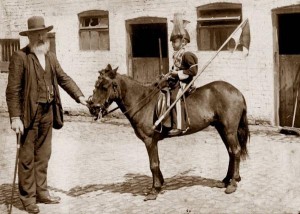
Sgt Major James Ikin Nunnerley
Entries were limited to Master Tradesmen living within a 1 mile radius of the Market Cross and all other entries could be from within a 6 mile radius of the Market Cross. This was to allow entries from tenants from surrounding farms to enter their own turnouts or decorate a cart for the Tableau procession.
Apart from the monetary prizes, special prizes were to be awarded by the following committee members and town businesses: Mr J.J. Balmforth, a pair of carvers valued at 21s for the winner of the Tradesman’s Master Class for Heavy Horse Turnouts; Mr James Arnold Williams, provision dealer of 31 Burscough Street promised a prize valued at 21s for the winner of the Single Heavy Horse Turnout; William Gilbert, Draper, of 10 Moor Street also promised a 21s prize to the winner of the most humorous float or tableau.
There was also a fancy dress on a quadruped category for both adults and children and a bicycle fancy dress parade with a baby show held in the Corn Exchange.
This would have been an amazing parade with the whole town and all business premises along the main streets being elaborately decorated for the event.

Thomas Hough, winner of the children’s fancy dress competition, with Sgt Major Nunnerley’s medals
The winner of the children’s fancy dress on a quadruped was a young man named Thomas Hough (1895 – 1985) who is shown in the picture dressed as Charge of The Light Brigade survivor Sgt Major James Ikin Nunnerley, who had a Gents outfitters shop at 27 Moor Street. The photo is taken at the rear of the Queens Head Hotel, Moor Street on the day of the Gala. Thomas is wearing a miniature uniform of the 17th Lancers. Thomas is also wearing Nunnerley’s medals. The photos belong to Thomas Hough’s son-in-law Bob Hanley.
Ormskirk On Parade
Ormskirk On Parade
Gala Day in Ormskirk
The people of Ormskirk have always enjoyed a good parade. Traditional events like the Ormskirk Gala, the District Agricultural Show and the Empire Day parades were highlights in the town. Coupled with the various Coronations, Jubilees and various Anniversary parades, the town has some wonderful celebrations to look back on.
The town Gala was a huge event, spread across various venues in the town and over a couple of days, dressing up was popular and dressing up and riding a bike was even more popular with prizes for the most imaginative turnouts.
The Lancashire Hussars parade down Moor Street
The local Agricultural Show attracted exhibitors from all over the United Kingdom and the standard of entry and judges in the livestock, Poultry and Agricultural produce was apparently extremely high with some very generous prizes for best in show in all categories.
The local venues included the Victoria Athletic Grounds off Southport Road, owned by James Eastham and used not only for the various sporting elements of the Gala but also the judging of the various elaborate floats and tableaux.

The parade on Empire Day, 24th May 1902
The first Empire Day held on 24th May 1902 and we have images of the event in Ormskirk as the parade passes the King’s Arms, Moor Street.
The Parish Church held a Sunday School Anniversary, or Walking Day, in July each year when the children walked from Greetby Fields, along Stanley Street, Moor Street and then up Church Street for a special service in the Church.
Military parades in the town were held on many occasions and Ormskirk Bygone Times holds a number of images from across the years, if anyone would like to share photos and stories of the town’s social events please visit our page at facebook.com/Ormskirkbygonetimes
var GmediaGallery_4;
jQuery(function () {
var settings = {“lockheight”:”0″,”catButtonColor”:”48220b”,”scrollBarTrackColor”:”48220b”,”thumbLoaderColor”:”48220b”,”imageTitleColor”:”ffffff”,”ID”:”4″,”moduleUrl”:”http:\/\/ormskirkbygonetimes.co.uk\/wp-content\/plugins\/grand-media\/module\/afflux”,”pluginUrl”:”http:\/\/ormskirkbygonetimes.co.uk\/wp-content\/plugins\/grand-media”,”libraryUrl”:”http:\/\/ormskirkbygonetimes.co.uk\/wp-content\/grand-media”};
var content = [{“cID”:”ormskirk-on-parade_3″,”name”:”Ormskirk On Parade”,”description”:””,”data”:[{“id”:”14″,”image”:”\/image\/Miss_leatherbarrow_2_.jpeg”,”thumb”:”\/image\/thumb\/Miss_leatherbarrow_2_.jpeg”,”title”:”A Sunday School Parade on Stanley Street in the early 1960s”,”description”:””,”link”:””,”date”:”2016-01-13 14:09:36″,”views”:0,”likes”:0,”websize”:[960,1280],”thumbsize”:[300,400]},{“id”:”13″,”image”:”\/image\/aughton_belles.jpg”,”thumb”:”\/image\/thumb\/aughton_belles.jpg”,”title”:”May Day Parade 1932″,”description”:””,”link”:””,”date”:”2016-01-13 14:09:30″,”views”:0,”likes”:0,”websize”:[684,960],”thumbsize”:[300,421]},{“id”:”12″,”image”:”\/image\/gala-day-postcard-ebay.jpg”,”thumb”:”\/image\/thumb\/gala-day-postcard-ebay.jpg”,”title”:”Gala Day in Ormskirk”,”description”:””,”link”:””,”date”:”2016-01-13 14:07:55″,”views”:0,”likes”:0,”websize”:[722,469],”thumbsize”:[462,300]},{“id”:”11″,”image”:”\/image\/lancashire-hussars-2.jpg”,”thumb”:”\/image\/thumb\/lancashire-hussars-2.jpg”,”title”:”The Lancashire Hussars parade down Moor Street”,”description”:””,”link”:””,”date”:”2016-01-13 14:07:55″,”views”:0,”likes”:0,”websize”:[597,417],”thumbsize”:[429,300]},{“id”:”10″,”image”:”\/image\/parade-empire-day-6.jpg”,”thumb”:”\/image\/thumb\/parade-empire-day-6.jpg”,”title”:”The parade on Empire Day, 24th May 1902″,”description”:””,”link”:””,”date”:”2016-01-13 14:07:55″,”views”:0,”likes”:0,”websize”:[944,670],”thumbsize”:[423,300]}]}];
GmediaGallery_4 = jQuery(‘#GmediaGallery_4’).gmAfflux([content, settings]);
});


An Ormskirk Christmas
An Ormskirk Christmas

The Nativity Scene outside Ormskirk Parish Chrurch
Ormskirk Bygone Times has been collecting the memories of our page followers over the last couple of years and it seems that amongst our 5000+ followers, many people share the same memories of the Ormskirk Christmas experience.
For many children the season was about visiting Father Christmas in his grotto at Burgesses on Church Street. Or to those a bit younger, Parker Franks on the same site.
The traditional junior school Nativity plays bring back memories of red shiny paper used for a fire and silver tinsel wrapped around coat hangers for Angel halos. Boys dressing gowns for Shepherds coats and singing Away In A Manger to our beaming parents sitting quietly watching, not a digital appliance in site, just the brain to record the memories and a photo for the local paper.

Our very own Dot as an angel in her school Nativity play
School Christmas dinners were exciting and at the end of the meal Father Christmas dropped in, oddly enough he never looked like the one in Burgesses.
Mahoods on Beaconsfield corner had a Christmas Toy department upstairs with train sets laid out and running. Taylors on Moor Street was full of seasonal gifts and toys.
The Nativity Scene at the Parish Church has changed little over the years, a plastic screen on the front to protect the contents from theft or damage being the main change.
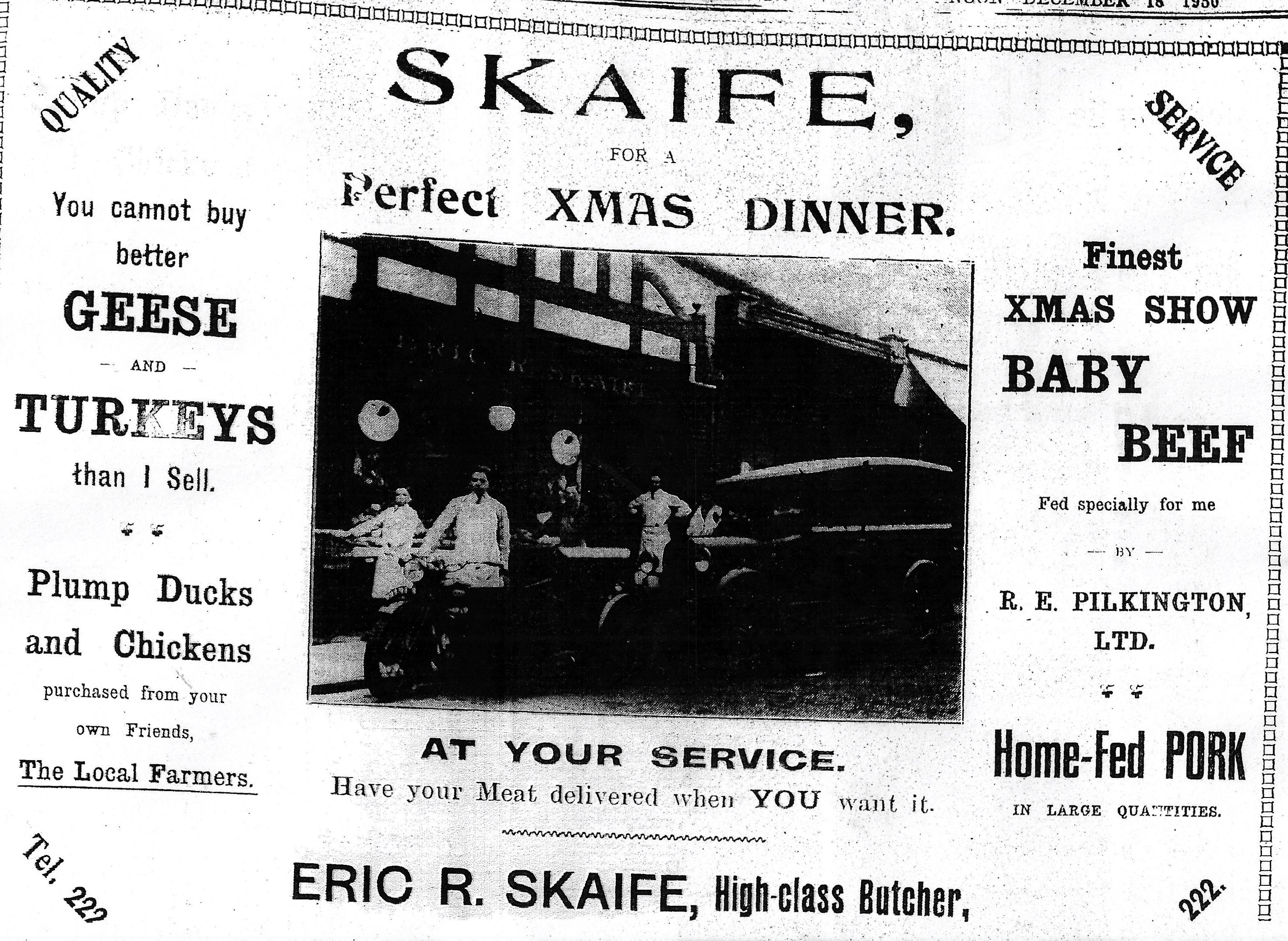
Shops in the town offered seasonal fayre of the highest quality. Butchers provided local fresh Pork,Turkey and Goose with home delivery.

Moor Street in the late 1960s
Car Parks were unheard of until the late 1960s, before then parking was wherever you needed to be and for however long you chose, although most people walked into town and carried their shopping home themselves.
The town had everything people needed for a comfortable family Christmas and it was all done without excess or t’internet with most workers having just a couple of days off.
Many people will remember the winter of 1962/63 when snow drifts 6ft to 8 ft high almost caused a problem. It was nothing a few men with spades couldn’t put right.
A selection of adverts relating to Christmas in Ormskirk


More Doctors In More Houses
More Doctors In More Houses
During the 19th and early 20th Centuries, the number of Medical men in the town grew with the building of fine residences to accommodate the Doctors, their apprentices, their families and servants and their social calendar.

Ormskirk Hall located between Alfred Wragg’s photography studio and The Wheatsheaf on Burscough Street. It was later demolished to build Wheatsheaf Walks
Ormskirk Hall, a large town house with a prominent portico entrance and large rear landscaped gardens and tennis courts, was the residence for several generations of the town’s medical men. With each generation a Surgery was named for the Surgeon of the time.
Dr Suffern had a house at the corner of Burscough Street and Derby Street West and it is still referred to as Dr Suffern’s House long after it was demolished in the 1960s to create a piece of wasteland where we could park for free.
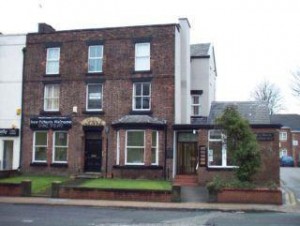
The Mansion House on St Helens Road which is now a dental surgery
The Mansion House on St Helens Road a former boys academy, was the doctor’s house of W.P. O’Regan in the 1930s after he first had a surgery at 3 Derby Street, The Mansion House had been the residence of Doctor William Anderton, the oldest of the Ormskirk Practitioners, dying in 1916 in his 69th Year. Dr Anderton was the Medical Officer of Health for Ormskirk UDC for over 40 years and Public Vaccinator for the same number of years. He had retired in 1913 and was succeeded by Doctor Young, but at the outbreak of War Dr Young enlisted and Dr Anderton returned to his duties, giving a few more years of service to his patients.
Doctor Marsden lived and worked at Ormskirk Hall, 28, Burscough Street, he served the towns people for 38 years until he retired in 1928 and moved to Surrey where he died aged 74 in 1932. Dr Marsden was a founder member of the Ormskirk Golf Club and a member of the cricket club. He akso worked as a surgeon at the Cottage Hospital. His son, H. E. Marsden took over the practise after old Dr Marsden retired and also held the post as Medical Officer to West Lancs. R.D.C. Young Doctor Marsden was tragically killed in a flying accident in Dublin before WW2 and it is credit to his service that many years later a floral tribute was dedicated to him in the Parish Church at the 1972 Flower Festival.
Doctor John Philip Pendlebury will likely still be remembered by some in the town. He was the house surgeon at the Ormskirk Dispensary and the Cottage Hospital and held the position as constabulary surgeon up until about 1929 the senior Doctor in the town. Dr Pendlebury was tragically killed after an accident on the London Underground following an earlier stroke, a tablet dedicated to his memory is situated in the Parish Church. One of Dr Pendlebury’s last patients may well have been the Music Hall star Charles Coburn, who fell ill with pneumonia in Ormskirk in June 1929.

Knowles House which was demolished to build the library
Knowles House, which was built in the glorious Georgian style, was for many years home to Doctors working in the town. In 1892, Irish born Dr John Joseph Hanly left the town with an amazing send off by his patients, colleagues and local dignitaries, who congratulated him on his work in the town and presented him with a gold chronometer watch. Dr Hanly was the son of an Irish GP and his son became a GP. He emigrated to Victoria, Australia soon after leaving Ormskirk and died there in 1932 aged 74. A later resident of Knowles House was Doctor John D. Craig, a man also remembered in modern times as an excellent physician.
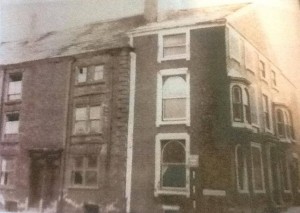
Dr Suffern’s House, demolished to build a car park and then the police station
Doctor Symonds of Ormskirk was a strong character and a professional amongst professionals who when needed led the way to ensuring the medical practitioners of the town were shown great respect by all who needed their services. Initially in the early 1850s Dr Charles Price Symonds had his practise in the Troqueer Buildings in Aughton Street, after establishing his practise there he moved into The Ormskirk Hall, Burscough Street and lived there until his death in 1905 aged 87. In 1862, Dr Symonds took the lead, with the support of all the medical practitioners in the town, in bringing about the prosecution of one Josiah Archer Bowen of Bretherton, who was suspected and charged by Symonds and his fellow medics of ‘…unlawfully and wilfully and falsely pretend to be and take the name and use the title of Surgeon’ the case was heard at the Ormskirk Petty Sessions, Bowen was fined £20.00, it is interesting to look back now on records not available to the justices in 1862. On the 1851 census for Bretherton, 27 year old Bowen lists his occupation as, ‘student in surgery’. At the 1862 hearing, no record of his medical qualification as a surgeon in either London or Edinburgh could be found in records presented, he had passed 2 minor medical exams. He had signed a number of death certificates signing himself as a ‘Sub’ M.R.C.S. which no one at the time understood what that meant. In 1871, the census tells us that Bowen had moved to Fishergate, Preston and his occupation is given as, ‘M.D. University of St Andrews, Licensed Faculty of Physicians and Surgeons, Glasgow, Licensed Doc. Of Apothecary London,General Practitioner’. Which means, that in the space of 8 years, he had taken 3 different University courses. In 1881, still in Preston, he is an M.O. of St Andrews University. In 1891 a Doctor of Medicine, Duly Registered Surgeon; In 1901 he has moved to Southport as a ‘semi retired medical practitioner, surgeon and J.P. . It is a curious story indeed.
Detailed accounts of the lives of the Doctors of the town link to many other professions and families from Ormskirk and Ormskirk Bygone Times has compiled a wealth of information on these people.
Doctor In The House Pt. 1
Doctor In The House Pt. 1
Ormskirk had no less than 8 ‘surgeons’ listed in the Baines Directory of 1824/25. Father and son William Snr and William Bibby Jnr. practised from different surgeries, the former in Burscough Street and the latter in Church Street. Burscough street seemed to have a busy practise as there were doctors Anderton, Ellis, Hancock, Houghton and Yates listed there in that same directory. William Bibby Snr and Thomas Hancock did move to a new surgery on Lydiate Lane before 1830. (Lydiate Lane became Derby Street).
The doctors had served their apprenticeships with senior partners and after taking an exam at the end of their apprenticeship they joined the practise or opened their own surgery.

Beaconsfield House
By the 1830s, a new Doctor had settled in the town, Yorkshire born Doctor Lax, who initially joined the practise of William Bibby Snr. William Lax graduated from the Royal College of Surgeons London in 1827. In 1850, Doctor Lax bought a ‘close’ of land in Lydiate Lane, (Derby Street) to build a surgery , at the same time land was acquired by the town from the Earl of Derby and Lord Stanley for the building of a Police Station and A Trustee Savings Bank in the same street. By 1861, Dr Lax had had a grand residence built at the junction of Moor Street and St Helens Road .William’s first wife, Ormskirk born Anne Jane nee Wareing, died within months of their daughter Anne Jane (1833 – 1924) being born. His second wife, Mary Maria Sourbuts, (1821 – 1898) was 15 years William’s junior and they had four children, only 2 surviving to childhood.
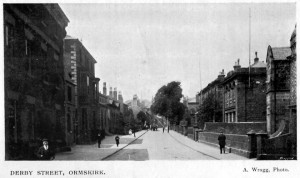
Derby Street, the site of Dr Lax’s surgery
Doctor Lax’s eldest daughter Anne Jane born 1833 never married and she was the Superintendant of the Parish Church Sunday School for over 50 years . After the death of her father, Anne moved from St Helens Road to a large 12 room property at 52 Derby Street which she re-named Beaconsfield, to reflect the home she had grown up in at Beaconsfield Corner. Her neighbour, in the house called Abbotsford, was another local Doctor, Hugh Heald, and next door to the Heald household was another large dwelling, Walmsley House, home of Anne’s half sister Lucy Sophia Parker nee Lax, who had married Thomas Percy Parker, son of the Aughton Brewer Thomas Sumner Parker, in 1890. Thomas Sumner Parker had bought the Aughton Street (Sudbury Star) Brewery from the Sudbury Brothers sometime between 1875 and 1881. Interestingly, Thomas Sumner Parker lived out his last days at Town End living next door to George Lea, the renowned local journalist and Author.

A newspaper cutting relating to the bequests of Miss Ann Lax. Click for a larger view
The story will continue soon with Dr Brandreth, Dr Knowles, The Mansion House, Dr Suffern’s House and Ormskirk Hall, all Doctors Residences.
Captain Edward Sudbury (1820-1870)
Captain Edward Sudbury (1820-1870)
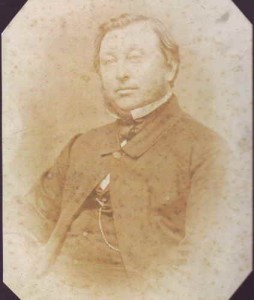
Captain Edward Sudbury
Sudbury ‘s Star Brewery , situated at the start of Prescot Road, and therefore within the Aughton Parish, was a successful business which Edward Sudbury joined as a partner along with his brother-in-law, Joseph Hewitt Pye (1817-1862). Nottinghamshire born Edward was a surveyor by occupation and worked not only for the ordnance survey but also the Ormskirk & Southport Building Society. He had trained as a land surveyor and had considerable experience in drainage and enclosure which he brought to the county. His first few years in Ormskirk saw him marry a young lady from Rainford, Hannah Pye, whose family not only owned the Star Brewery but also the brickworks at Martin Lane Burscough.

The Brewery at Town End, owned by Edward Sudbury and later his four sons
Edward Sudbury was a Captain in the 54th Lancashire Rifle Volunteers (54th LRV) from the 1860s succeeding Lieutenant John Dickinson.
Edward Sudbury died at home, at the Brewery, Aughton in 1870. His funeral was a large affair and the town’s business closed their shops and offices at 12 noon as a mark of respect. People of the town lined the streets to bow their heads as the funeral procession passed on it’s way to Ormskirk Parish Church led by the band and troop of the 54th.

An advert for the Sudbury Star Brewery. Click for a larger view
Amongst the mourners there was a carriage containing the town’s prominent citizens as Edward had been a Brother of a local lodge and had held office.
The 54th Rifles fired three volleys over the grave and the Masons performed their traditional funeral ceremony at the grave side with J. B. Lambert giving a moving testimony.
After his death, the Star Brewery continued for a number of years under the management of his four sons.
Buffalo Bill’s Wild West Show – Sept 1904
“Buffalo Bill’s Wild West and Congress of Rough Riders of the World” Travelling Show – September 1904
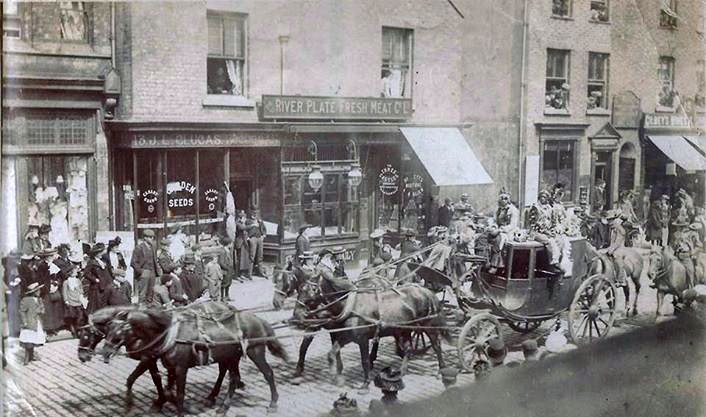
During the 1904 tour of the “Buffalo Bill’s Wild West and Congress of Rough Riders of the World” travelling show, the touring company passed through Ormskirk on the way to Southport from the previous venue in Wigan.

Cody with the Cowboys and ‘US Cavalry’
September 30th 1904 the main body of the show travelled by several dedicated trains from Wigan through to Southport but the stagecoach and several dozen of the show riders paraded through the town, no doubt to create some publicity.
The show travelled from New York to Liverpool in Spring 1904 and then used 4 special trains to travel to the first venue, Stoke on Trent.

Buffalo Bill with the Oglala Lakota
The 1904 UK tour began in Stoke on 25th April and after performances in England, Scotland and Wales and 132 towns the tour ended in Hanley, Staffordshire on October 21st. A total of 4114 miles of train travel took the performers around the country and the shows were hugely well attended.
There had been an earlier tour during 1902/03 but the nearest it came to Ormskirk was Liverpool and local people had waited for the return of the show and lined the streets to watch the different riders parade past.

A tour poster from the 1904 tour. Click for a larger view
There weren’t just ‘Cowboys and Indians’ in the show, as it had been previously, this time there were Cossack horsemen from Georgia, Mexican Vaqueros, Turks, Argentine Gauchos, Arab Spahis (Horse Soldiers) , and Mongolian riders. The parade must have been colourful and spectacular.
Oglala Lakota Sioux were a huge part of the show and performed throughout the history of the Buffalo Bill shows giving some thrilling performances that must have had crowds mesmerised and enthralled, especially the young children watching the show. Although Sitting Bull had left the show a decade or more earlier, his son, Young Sitting Bull did apparently appear in this tour.
After leaving Southport the tour went on to Leigh and newspaper accounts of the event still survive.
Ormskirk Bygone Times has created a small display and booklet on the tour and the show which will be available to view at our exhibition in Skelmersdale Library on Saturday 28th November 2015. Please call in for a chat and to see our growing mobile exhibition.