
Home » 2016 (Page 3)
Yearly Archives: 2016
Recent Articles
 Chapel Street Chapels11th July 2016
- Ormskirk: A Historic Market Town6th July 2016
 An Ormskirk Tradition: The Sunday School Anniversary Walks6th July 2016
 Riot At Ormskirk6th July 2016
 Ormsirk Men & The First Weeks Of The Battle Of The Somme4th July 2016
Top Articles

With Love From Ormskirk
With Love From Ormskirk
As Valentines Day once more approaches, let’s look back at how the romantics of the town put a lot of effort into marking the day with their own true love.
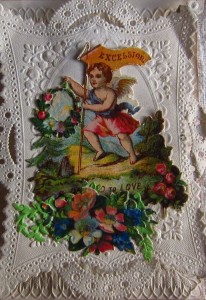
An example of a Victorian Valentine card
In the 1830’s, 60,000 valentine cards were sent by the relatively expensive postal service in Great Britain. These cards were not as we find today, mass produced and put out on display for you to browse and select what suits. The cards sent in the 19th century were mainly homemade, elaborate postcards, decorated with silk and lace and ribbons.
People of Ormskirk would have been as skilled as anyone else at crafting a special card for their Valentine with coin spent on a little piece of ribbon or lace from the local milliners in the town, for those who could afford that. Many girls probably sacrificed trimmings from their Sunday Bonnets and possibly various other apparel, to decorate their cards.

The site of Ormskirk’s original post office on Aughton Street
We can only wonder at how so many thousands of cards were sent on Valentines Day at a time when many young people would only be able to make their mark ‘X ‘on their marriage lines! Symbolic tokens of love crafted onto a homemade card, along with it being the 14th February must have helped to deliver the message without words!
Young people met through the workplace, Church or Chapel or family occasions, Ormskirk was a town which adored its gatherings and festivities all year round, with Church Bazaars, Town Galas, theatrical and musical performances available at several theatres and venues in the town and many groups for young people to meet and fall in love. It wasn’t all about working a 6 day week with no time to relax, people in the 19th century didn’t travel miles to work, days were long but social events were very well supported, there was little to stay at home for! Entertainment brought people together outside of work.

Another example of a Victorian Valentine card
Once the cards were made and ready to post, the busiest place in the town on the 13th and 14th February in the 19th century would have been the post office, for most of those early years it was at the corner of Aughton Street and Church Street, offering delivery the same day for local post, the foot post from Southport arrived late in the day, by 5.30 if the post man made good time.
The marked difference between 19th Century homemade Valentines Cards and the more modern mass manufactured cards which we know of is the cost and possibly more so the personal touch. The only financial gain then was for the post office.
From A Distance – A New Perspective On Ormskirk Parish Church
From A Distance – A New Perspective On Ormskirk Parish Church
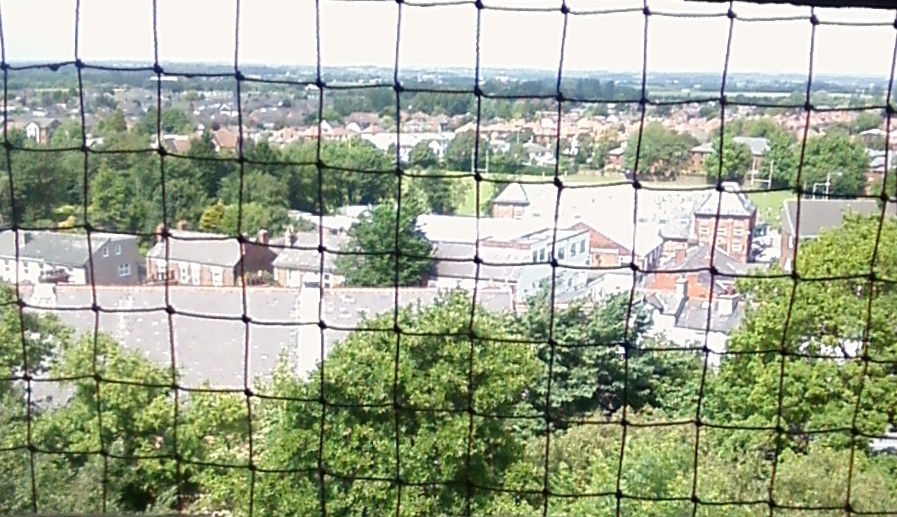
A treat for those who have never been able to ascend to the dizzy heights of the Parish Church Tower. We have views covering all four sides of the tower. The netting is there to prevent birds getting inside.
On a clear day the uninterrupted view from all sides is stunning and it does show how elevated the Church is. We all know the tower from the outside, these images give you a peak at the inside and the inside out. Can you spot your house?
The photos were taken during the 2014 Summer Fete.




The History Of Ormskirk Civic Hall
The History Of Ormskirk Civic Hall

The Drill Hall (now the Civic Hall) in 1939
Whilst the future of the Civic Hall is now uncertain, the history of the building is set in stone, quite literally. The land on which the purpose built drill hall was erected was donated to the Ormskirk companies of the 3rd Volunteer Battalion King’s Liverpool Regiment at the start of the 20th century by their long serving Colonel, James Eastham Esq. The stones built into the front of the building testify to that fact.

The stone laid into the front of the hall
James Eastham was a brewer who lived at Edinfield, Southport Road. He was also the Colonel of the local Volunteer Yeomanry. His house is no longer there, although the old gateposts still stand adjacent to Southport Road, with the name Edinfield still clearly carved in the stone. Eastham had served as a volunteer with D Troop, the Lancashire Hussars when the Sgt Major and drill instructor had been Sgt Major James Ikin Nunnerley, 17th Lancers and survivor of the Charge of The Light Brigade, who became the drill instructor in the town in the 1870s when practise had to be done in the open and very often in difficult conditions.
The hall was used by the Volunteer Battalions and Cadet Battalions for drill practise as the length of the hall, extending to the rear down Church Fields, could accommodate the drilling patterns adequately but allowed the practise to be held indoors.

An advert for a dance at the Drill Hall, 1946. Click for a larger view.
When the hall was not being used for military purposes, it was turned into a venue for tea dances, Dance Band concerts and theatrical performances. After the demolition of the Working Men’s Institute in the early 1960s, the council speculated as to whether it would be financially possible to refurbish and refit the Drill Hall to create a civic centre rather than spend £160,000 on a purpose built modern civic building on the derelict Moor Street site of the late Institute.

The opening of Ormskirk Civic Hall in 1970
In the late 1960s the hall was bought by the council for £6000, after spending a further £31.500 on the hall, the newly refurbished Civic Hall opened its doors to the towns’ people on Saturday 12th December 1970, it was formally opened by Council Chairman Andrew Gore, with various social functions planned for the hall. Interestingly, the success of the new venue was quite possibly due to the initiative of the council members, who, in November 1968 had invited people from local groups and community organisations to meet at the Drill Hall to discuss possible future needs and requirements to which the planned refurbishment could be specifically tailored. On completion of the work and after the opening ceremony, those same groups and organisations sent their representatives back to see the finished hall, and it was unanimously agreed that the work done had made use of this public consultation to achieve the best result possible.

Wrestling at Ormskirk Civic Hall. Click for a larger view
During the 1970s and 80s the hall was the centre of the nightlife in the town and was very busy and events were very well attended.
Many people will have memories of the discos, wrestling bouts, operatic shows, amateur dramatic presentations and a multitude of civic functions.
The building has been an asset to the town in so many ways for over 100 years, with some foresight there is potential for this building, given to the town so many years ago, to thrive again.
Ormskirk Bygone Times has researched the Eastham family and other stories from the town relating to this building and many others and you can read lots more about it on our Facebook page at https://www.facebook.com/Ormskirkbygonetimes
Ormskirk Gala
Ormskirk Gala

Gala Day in Ormskirk 1904
Ormskirk Gala Day was held during August each year for many years. The organising committee made advance preparations throughout the summer months with several committees set up to ensure the smooth running of this very popular event.
Mr J.J. Balmforth, the ironmonger of Aughton Street, presided over the General committee, an Entertainment Committee made sure that a circus was booked and all necessary plane were put in place to accommodate the whole Circus in the Gala Parade and provide the venue on the Victoria Pleasure Grounds.
The Procession and Turnouts Committee set about organising the order of the parade to include Tradesman’s and Farmer’s Turnouts, that is, a wagon or cart pulled by a team of Heavy or Working Horses, with the wagons and carts decorated to various themes. These were judged in a series of classes and an entry fee of between 1s and £1 with monetary prizes for 1st, 2nd and 3rd places of between £1 and £5 depending on the class.
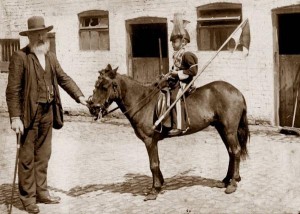
Sgt Major James Ikin Nunnerley
Entries were limited to Master Tradesmen living within a 1 mile radius of the Market Cross and all other entries could be from within a 6 mile radius of the Market Cross. This was to allow entries from tenants from surrounding farms to enter their own turnouts or decorate a cart for the Tableau procession.
Apart from the monetary prizes, special prizes were to be awarded by the following committee members and town businesses: Mr J.J. Balmforth, a pair of carvers valued at 21s for the winner of the Tradesman’s Master Class for Heavy Horse Turnouts; Mr James Arnold Williams, provision dealer of 31 Burscough Street promised a prize valued at 21s for the winner of the Single Heavy Horse Turnout; William Gilbert, Draper, of 10 Moor Street also promised a 21s prize to the winner of the most humorous float or tableau.
There was also a fancy dress on a quadruped category for both adults and children and a bicycle fancy dress parade with a baby show held in the Corn Exchange.
This would have been an amazing parade with the whole town and all business premises along the main streets being elaborately decorated for the event.

Thomas Hough, winner of the children’s fancy dress competition, with Sgt Major Nunnerley’s medals
The winner of the children’s fancy dress on a quadruped was a young man named Thomas Hough (1895 – 1985) who is shown in the picture dressed as Charge of The Light Brigade survivor Sgt Major James Ikin Nunnerley, who had a Gents outfitters shop at 27 Moor Street. The photo is taken at the rear of the Queens Head Hotel, Moor Street on the day of the Gala. Thomas is wearing a miniature uniform of the 17th Lancers. Thomas is also wearing Nunnerley’s medals. The photos belong to Thomas Hough’s son-in-law Bob Hanley.
Ormskirk On Parade
Ormskirk On Parade
Gala Day in Ormskirk
The people of Ormskirk have always enjoyed a good parade. Traditional events like the Ormskirk Gala, the District Agricultural Show and the Empire Day parades were highlights in the town. Coupled with the various Coronations, Jubilees and various Anniversary parades, the town has some wonderful celebrations to look back on.
The town Gala was a huge event, spread across various venues in the town and over a couple of days, dressing up was popular and dressing up and riding a bike was even more popular with prizes for the most imaginative turnouts.
The Lancashire Hussars parade down Moor Street
The local Agricultural Show attracted exhibitors from all over the United Kingdom and the standard of entry and judges in the livestock, Poultry and Agricultural produce was apparently extremely high with some very generous prizes for best in show in all categories.
The local venues included the Victoria Athletic Grounds off Southport Road, owned by James Eastham and used not only for the various sporting elements of the Gala but also the judging of the various elaborate floats and tableaux.

The parade on Empire Day, 24th May 1902
The first Empire Day held on 24th May 1902 and we have images of the event in Ormskirk as the parade passes the King’s Arms, Moor Street.
The Parish Church held a Sunday School Anniversary, or Walking Day, in July each year when the children walked from Greetby Fields, along Stanley Street, Moor Street and then up Church Street for a special service in the Church.
Military parades in the town were held on many occasions and Ormskirk Bygone Times holds a number of images from across the years, if anyone would like to share photos and stories of the town’s social events please visit our page at facebook.com/Ormskirkbygonetimes
var GmediaGallery_4;
jQuery(function () {
var settings = {“lockheight”:”0″,”catButtonColor”:”48220b”,”scrollBarTrackColor”:”48220b”,”thumbLoaderColor”:”48220b”,”imageTitleColor”:”ffffff”,”ID”:”4″,”moduleUrl”:”http:\/\/ormskirkbygonetimes.co.uk\/wp-content\/plugins\/grand-media\/module\/afflux”,”pluginUrl”:”http:\/\/ormskirkbygonetimes.co.uk\/wp-content\/plugins\/grand-media”,”libraryUrl”:”http:\/\/ormskirkbygonetimes.co.uk\/wp-content\/grand-media”};
var content = [{“cID”:”ormskirk-on-parade_3″,”name”:”Ormskirk On Parade”,”description”:””,”data”:[{“id”:”14″,”image”:”\/image\/Miss_leatherbarrow_2_.jpeg”,”thumb”:”\/image\/thumb\/Miss_leatherbarrow_2_.jpeg”,”title”:”A Sunday School Parade on Stanley Street in the early 1960s”,”description”:””,”link”:””,”date”:”2016-01-13 14:09:36″,”views”:0,”likes”:0,”websize”:[960,1280],”thumbsize”:[300,400]},{“id”:”13″,”image”:”\/image\/aughton_belles.jpg”,”thumb”:”\/image\/thumb\/aughton_belles.jpg”,”title”:”May Day Parade 1932″,”description”:””,”link”:””,”date”:”2016-01-13 14:09:30″,”views”:0,”likes”:0,”websize”:[684,960],”thumbsize”:[300,421]},{“id”:”12″,”image”:”\/image\/gala-day-postcard-ebay.jpg”,”thumb”:”\/image\/thumb\/gala-day-postcard-ebay.jpg”,”title”:”Gala Day in Ormskirk”,”description”:””,”link”:””,”date”:”2016-01-13 14:07:55″,”views”:0,”likes”:0,”websize”:[722,469],”thumbsize”:[462,300]},{“id”:”11″,”image”:”\/image\/lancashire-hussars-2.jpg”,”thumb”:”\/image\/thumb\/lancashire-hussars-2.jpg”,”title”:”The Lancashire Hussars parade down Moor Street”,”description”:””,”link”:””,”date”:”2016-01-13 14:07:55″,”views”:0,”likes”:0,”websize”:[597,417],”thumbsize”:[429,300]},{“id”:”10″,”image”:”\/image\/parade-empire-day-6.jpg”,”thumb”:”\/image\/thumb\/parade-empire-day-6.jpg”,”title”:”The parade on Empire Day, 24th May 1902″,”description”:””,”link”:””,”date”:”2016-01-13 14:07:55″,”views”:0,”likes”:0,”websize”:[944,670],”thumbsize”:[423,300]}]}];
GmediaGallery_4 = jQuery(‘#GmediaGallery_4’).gmAfflux([content, settings]);
});


